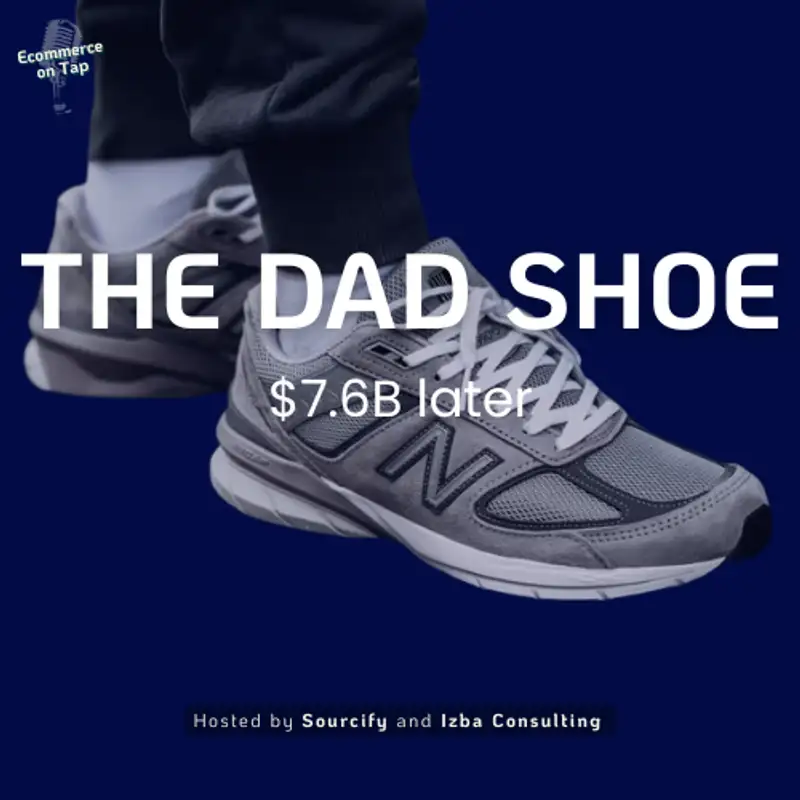
New Balance: The Dad Shoe That Waited for the World to Catch Up
New Balance spent most of its 120-year history as a punchline: the gray suede sneaker your dad wore with white crew socks and a phone holster. On this episode of Ecommerce on Tap, Aaron Alpeter is joined by cohost Becca Oden, VP of Supply Chain for a portfolio of women's health brands and former operator at Uqora, to reverse-engineer how New Balance went from a 1906 arch-support company to a $7.6B privately-held athletic brand courting a $25B valuation. They trace the company through founder William Riley's chicken-foot origin story, its unusual width-based manufacturing complexity, its domestic factories in Maine and Massachusetts, the 2016 TPP controversy, and the collaboration strategy (JJJJound, Aime Leon Dore, Joe Fresh Goods) that turned an "uncool" archive into a cultural platform. The takeaway for founders: unfashionable is not the same as undifferentiated, and the capabilities that look like inefficiencies on a spreadsheet are sometimes the entire moat.
In this episode:
- Why New Balance spent 50 years as an arch-support company before it became a sneaker brand
- The real cost (and real value) of keeping factories in the US when nearly the whole industry moved to Asia
- How the 990 became four completely different products to four completely different audiences at once
- Why New Balance's 2016 TPP comments triggered a backlash it never intended
- How the JJJJound and Aime Leon Dore collaborations turned an archive nobody wanted into the 550's comeback
- Who could realistically acquire New Balance, and why LVMH, Adidas, and Nike each come with a different problem
Guest: Becca Oden — VP of Supply Chain, women's health brands